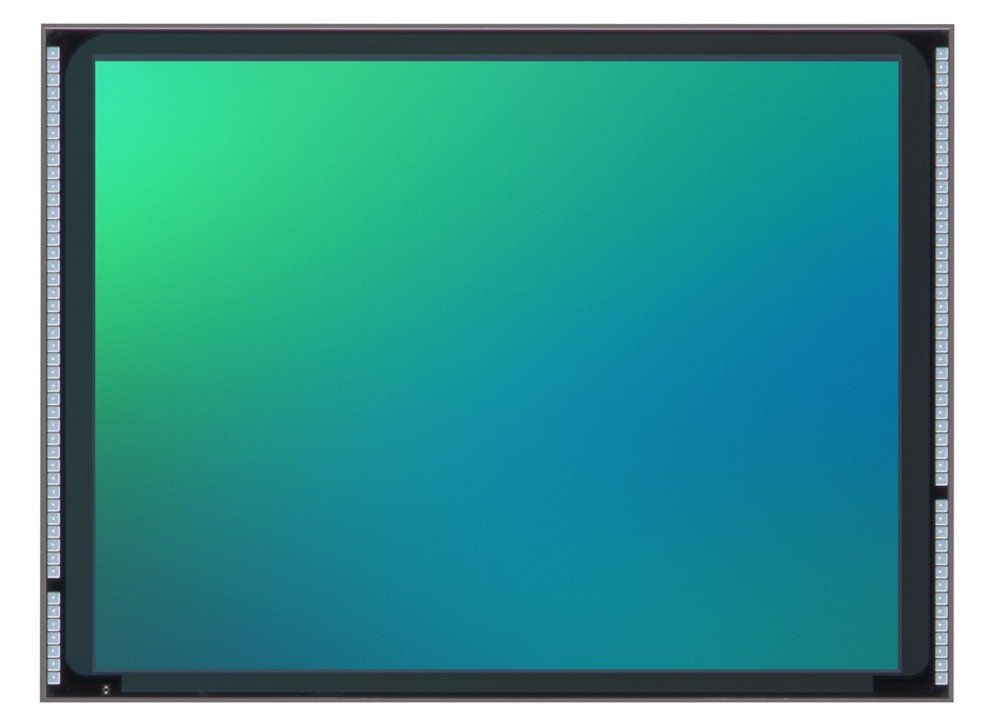
New pixel design and algorithm deliver more than 20% higher definition compared to Sony’s conventional product
LYTIA 610 CMOS image sensor
National, 25th June 2026: Sony Semiconductor Solutions Corporation has announced the launch of the LYTIA 610, a 1/2-type CMOS image sensor featuring an approximately 64-effective megapixel resolution and the RB2×2 On-ChipLens (OCL) pixel structure. The sensor is the industry’s first*¹ product with this advanced pixel structure to enter mass production.

Bycombining the RB2×2 OCL pixel structure with dedicated array conversion processing (remosaicing) optimised for this structure, delivers enhanced resolution along with improved autofocus (AF) performance. It also offers 20% improvement in spatial resolution*²compared to Sony’s conventional product with the same pixel size*³, enabling telephoto cameras to capture subjects with greater detail and clarity. Additionally, the improved readout speed allows 4K 120fps video recording for the first time on Sony’s 1/2-typesensor, narrowing the performance gap with larger sensors used in main cameras and delivering a more consistent image quality experience across multi-lens camera systems.
| Model name | Mass-production shipment date |
| LYTIA 610 1/2-type 64-effective-megapixel*4 stacked CMOS image sensor for mobile applications | End of June 2026 |
- Offers High Resolution and Enhanced Autofocus Performance with Industry-First RB2×2 OCL Pixel Structure and Dedicated Processing Technology
The LYTIA 610 features Sony’s industry-first¹ RB2×2 OCL pixel structure, designed to achieve high-resolution imaging and enhanced autofocus performance within a single sensor.
The innovative structure combines a 1×1 OCL arrangement for improved image resolution and a 2×2 OCL structure that supports phase-detection autofocus, enabling sharper image capture with accurate focusing performance. With advanced sensordesign and manufacturing expertise, the technology optimises different lens structures within the Quad Bayer array, allowing the sensor to deliver high quality imaging capabilities.
Combined with a newly developed dedicated remosaicing (array conversion) processing algorithm, the new sensor delivers 20% improvement in spatial resolution compared to Sony’s conventional sensor with the same pixel size³, enabling smartphonetelephoto cameras to capture subjects with greater detail while maintaining excellent autofocus performance.

Structural diagram of RB2×2 OCL
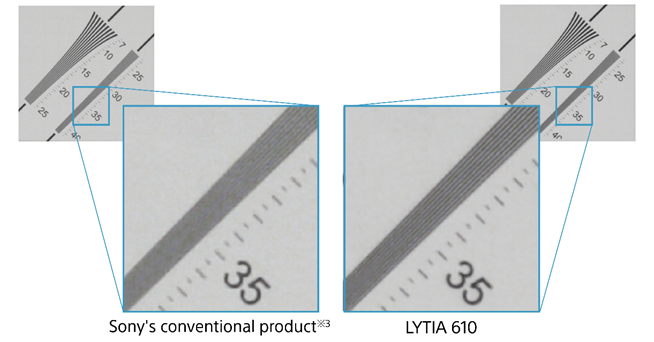
Spatial resolution comparison with Sony’s conventional product
- Sony’s first 1/2-type sensor to support 4K 120 fps video recording
The new senor comes with an advanced logic circuits designed for lower power consumption, along with an optimised analog-to-digital conversion (AD) circuit that enables high-speed data processing through increased parallelisation. Thisallows the sensor to achieve twice the readout speed compared to Sony’s conventional 1/2-type sensor*³, enabling improved video capabilities.
The enhanced performance supports 4K 120fps video recording for the first time on Sony’s sensor of the same size, allowing users to capture smooth footage of fast-moving subjects and create high-quality slow-motion videos.
The sensor also supports 4K 60fps HDR video recording, making it suitable for capturing scenes with challenging lighting conditions and high contrast. These advancements help deliver a more consistent imaging experience across multi-camerasmartphone systems by reducing differences in image quality and appearance when switching between main and telephoto cameras.
Key Specifications
| Model name | LYTIA 610 | |
| Image size | 1/2.0-type (diagonal 8.095 mm) | |
| Effective pixels | Approx. 64 megapixels | |
| Unit cell size | 0.7 µm × 0.7 µm (H × V) | |
| Colour filter | Quad Bayer Coding | |
| OCL pattern | RB2×2 OCL | |
| Frame rate | 64 megapixels (4:3) | 24 fps |
| 16 megapixels (4:3) | 60 fps30 fps (DAG-HDR) | |
| 4K2K (16:9) | 120 fps60 fps (DAG-HDR) | |
| Power supply | Analog | 2.8 V/1.8 V |
| Digital | 0.81 V | |
| Interface | 1.8 V or 1.2 V | |
| Output interface | MIPI® C-PHY 2/3 trio, Max. 4.5Gsps/trioMIPI D-PHY 2/4 lane, Max. 2.5Gbps/lane | |
Related Link
For Slow-motion Sample (4K 120 fps), please visit our website.
https://www.sony-semicon.com/en/news/2026/2026062401.html
For more information on LYTIA, the Sony’s mobile image sensor brand, please visit the LYTIA brand site: https://www.sony-semicon.com/en/products/is/mobile/index.html
* LYTIA and the LYTIA logo are registered trademarks or trademarks of Sony Group Corporation.
* All product and service names that appear in this announcement are the trademarks or registered trademarks of their respective owners.